Summer Program Resources
The Office of Undergraduate Research offers many ways to support your summer undergraduate research program from setup to execution.
Get Started
The Office of Undergraduate is available to consult with you at any stage in planning your summer (or academic year) undergraduate research program. Staff have prior grant writing, mentorship, and research program management experience.
Stay Connected
Please fill out the Summer 2026 NC State Undergraduate Research Programs-Information Form. This allows the Office of Undergraduate Research to…
- Keep you and other key members of your team informed on summer program-related news such as:
- professional development offerings,
- policy and/or logistical changes,
- and event details.
- Advertise your summer program to NC State and outside students (only if desired).
- Your program will be linked on the Find Summer Research Programs page and, by request, advertised in the OUR Newsletter.
- Include your summer program in the summer symposium abstract submission form (to ensure your participants connect their submissions to your program under one consistent name).
- Track the different summer program needs across the campus (to improve resources and inform decision-making/policy changes).
Navigate Paperwork
The Logistics Information for Undergraduate Research Programs Document covers key steps (for both NC State and non-State students) and the responsible office for the following:
- Terms and Conditions
- Offer Letter
- Unity ID and Access
- Supplier ID
- Stipend Payments
- Tax and Financial Aid Information
- Responsible Conduct in Research (RCR) Training
- Request For Accommodations
Additional Campus Resources
University Housing
Programs seeking to provide housing for their summer students should start by filling out the request form provided by University Housing’s Conferences and Guest Services. University Housing also has a Research Experience for Undergraduate (REU) FAQ-2026 document to help answer common questions. If you need additional help, please reach out to Olivia Sachtleben ([email protected]).
Move-In Date: May 19, 2026
Move-Out Date: August 1, 2026
Note: If your program will last longer than the summer term, please reach out to University Housing in August/September to discuss arrangements.
Wolfpack One Cards
To inquire about costs and obtain Wolfpack One Cards for your students, email the following to Conise Watkins at [email protected]: program name, student names and Unity IDs.
Note: To receive their One Cards, students must bring one of the following forms of photo ID during office hours (Monday-Friday 8:00 a.m. to 6:00 p.m.): drivers license, passport, state identification and/or military ID.
University Dining
To make arrangements for your students, reach out to Keith Smith at [email protected] or 919-513-2343.
Note: Hours of operation are typically limited in the summer, please have your students use the University Dining website to see what is open on a specific day.
Gym Access
To inquire about costs and arrange access for your students, email the following to Jonah Gilkeson at [email protected] and Sean Foley at [email protected]: list of student names, emails, and Unity IDs; plus billing information with contact information.
Parking Passes
To inquire about costs and arrange student parking passes for your student participants, email Cassandra Tucker-Daniels at [email protected].
Note: Students will need to go to the transportation office with their Wolfpack One Card, vehicle registration, and proof of car insurance to get a summer student pass.
Health Services
To arrange access for your students, email the following to Denise Joshua, [email protected], prior to the beginning of your program: list of student names and Unity IDs, program name, and coordinator contact.
Note: Students will have access to primary care, but not Counseling Services.
Lighten Your Load
Outcomes Assessment
The Office of Undergraduate Research recommends utilizing the well-studied assessment tool developed by Singer and Zimmerman (2012) which covers a comprehensive list of core competencies key to undergraduate research in any field.
While programs with the financial resources may wish to utilize EvaluateUR, the OUR has created a simplified version of this online tool for evaluating undergraduate research-related skill and knowledge development.
Check out our Core Competency Worksheets to determine the best fit for your program.
Weekly Workshop Series

The Office of Undergraduate Research offers a summer workshop series specifically designed to cover the foundational needs of any summer research program. In turn, this allows you to focus on providing field- and program-specific training.
These workshops will be held on Tuesdays 9:00-10:30 a.m. with topics remaining consistent from summer to summer so that you can plan around them. See table below for details on each weekly workshop.
Student Presentations
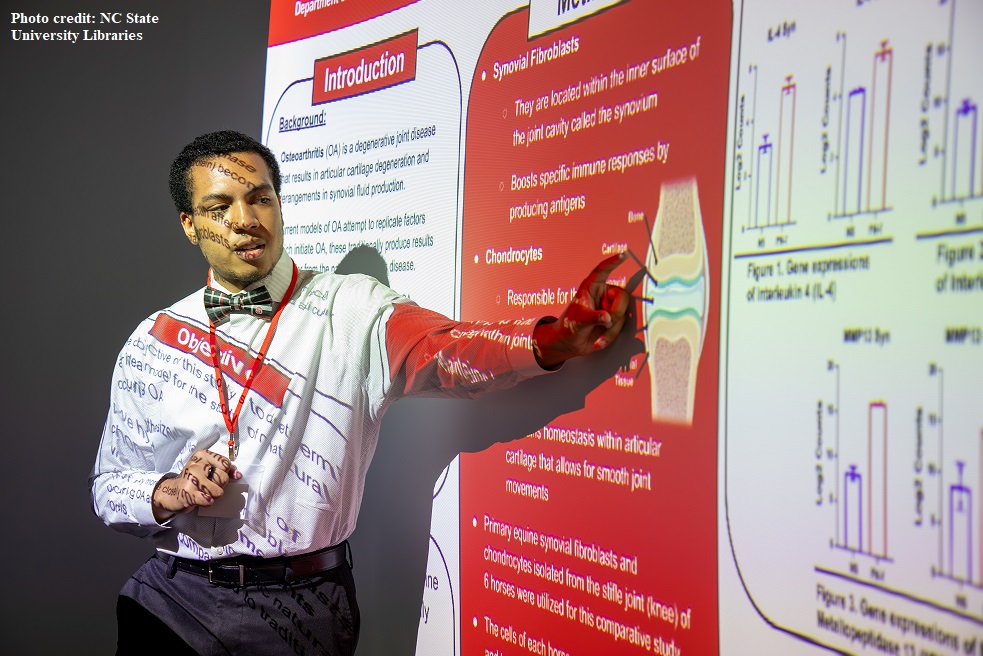
At the end of the summer, the Office of Undergraduate Research, in collaboration with NC State University Libraries, hosts a campus-wide Summer Undergraduate Research and Creativity Symposium. Details and deadlines are kept up to date on the summer symposium page.
Coming Soon: Guidance for summer session 2 instructors who would like their students to participate in the OUR’s summer symposium.
Additional Programming
The OUR will run additional summer workshops (on top of the recurring workshops listed in the table below), that may be of interest to you and your students. Descriptions, times, and locations will be posted closer to the start of the summer. Topics will vary from summer to summer. Any student who wishes to attend is welcome! We will take attendance should you wish to confirm participants’ attendance.
Recurring Workshop Topics and Learning Objectives
| Topic | Date: Tuesdays 9:00-10:30 Room Location: Williams Hall 2215 | Learning Objectives: By the end, students will be able to… |
|---|---|---|
| Starting Off on the Right Foot in Research | May 26, 2026 | -describe common expectations in undergraduate research -identify best practices for time and data management -compare and contrast mentor-mentee communication strategies -identify additional resources available to support undergraduate researchers |
| How to Write a Research Paper | June 2, 2026 | -describe the major sections of a research paper -compare and contract authorship qualifications -list steps to starting a research paper -identify writing resources -connect communication and time & data management strategies to writing |
| How to Create a Research Poster | June 9, 2026 | -describe the major sections of a research poster -identify the key components of an effective poster -identify and avoid common mistakes in creating research posters -draft a research poster & abstract |
| Responsible Conduct of Research (part 1) | June 16, 2026 | -define RCR -describe the importance of RCR -identify and Describe the major topics within RCR -describe ethical decision making -compare and contrast options when provided an ethical research dilemma -identify RCR resources available for researchers |
| Responsible Conduct of Research (part 2) | June 23, 2026 | (see above) Note: Both parts must be attended in order to earn RCR training credit. |
| Best Practices in Leadership | June 30, 2026 | -list components of a healthy work environment -describe methods to motivate teammates and promote belonging -describe methods to resolve conflict -identify resources for continued self-improvement |
| Applying for Scholarships and Fellowships | July 7, 2026 | -list the major steps in the application process -identify reviewers’ objectives -describe the key components of an effective application -draft a personal statement for a scholarship |
| Applying to Graduate School | July 14, 2026 | -list the major steps in the application process -compare and contrast key factors affecting where to apply -describe the key components of an effective application -draft a personal statement for graduate school |
| Graduate Student Panel | July 21, 2026 | -describe key aspects of the graduate school experience -identify solutions to potential challenges relating to applying to and/or succeeding in graduate school -compare and contrast the impact of graduate school on their individual career goals |